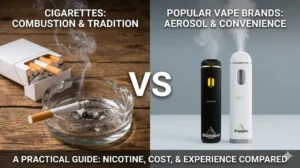
When people compare vape vs cigarettes, one of the most important questions is not just about nicotine but about chemicals and carcinogens. What exactly enters your body when you inhale cigarette smoke compared to vape aerosol? And how do substances like diacetyl and formaldehyde factor into the risks?
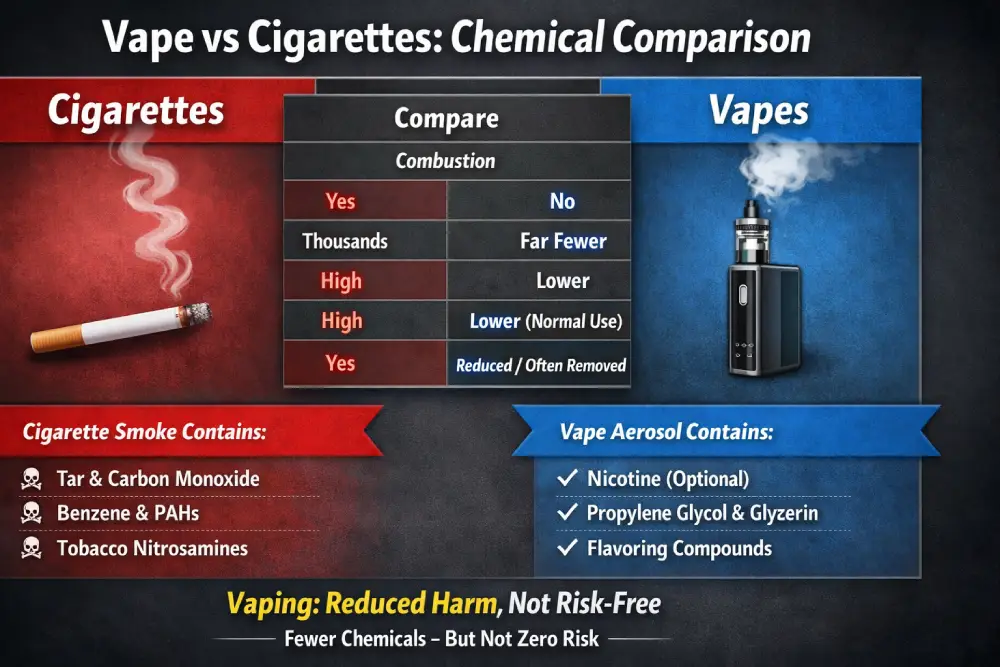
This article takes a clear, evidence-based approach to explaining the chemicals in vape vs cigarettes, how carcinogens form, and what current research suggests without exaggeration or fear-based claims.
Table of contents
- Why Chemicals Matter in the Vape vs Cigarettes Debate
- Chemicals in Cigarettes: What Are You Inhaling?
- Chemicals in Vape Aerosol: What’s Different?
- Carcinogens in Cigarettes vs Vape
- Formaldehyde in Cigarettes vs Vape
- Diacetyl in Cigarettes vs Vape: Is It Dangerous?
- Vape vs Cigarettes: Chemical Exposure Comparison
- Featured Snippet: Vape vs Cigarettes Chemical Comparison
- Why Device Quality and Usage Matter
- What Do Studies and Health Authorities Say?
- Frequently Asked Questions
- Final Thoughts: Chemicals & Carcinogens in Vape vs Cigarettes
Why Chemicals Matter in the Vape vs Cigarettes Debate
Every inhaled product exposes the lungs to chemical compounds. The key difference between smoking and vaping is how those chemicals are created and delivered.
- Cigarettes rely on combustion (burning tobacco)
- Vapes rely on heating liquid to form an aerosol
This single difference dramatically affects the type and quantity of chemicals produced.
Chemicals in Cigarettes: What Are You Inhaling?
Cigarette smoke is created by burning tobacco at extremely high temperatures. This process produces thousands of chemical compounds, many of which are harmful.
Major Chemical Groups in Cigarette Smoke
Cigarette smoke typically contains:
- Tar (a sticky residue that coats lungs)
- Carbon monoxide
- Ammonia
- Benzene
- Formaldehyde
- Heavy metals
Many of these chemicals are byproducts of combustion, not naturally present in raw tobacco.
Why Combustion Creates More Harmful Chemicals
When tobacco burns:
- Organic material breaks down
- New toxic compounds form
- Fine particles are released deep into the lungs
This is why cigarettes are consistently associated with higher chemical exposure than non-combustion alternatives.
Try our best vapes which is not dangerous for health and also best in taste.
KO Blend Disposable Vape X – (2G)
Chemicals in Vape Aerosol: What’s Different?
Vape devices do not burn tobacco. Instead, they heat a liquid (often containing nicotine, flavorings, and base ingredients) to create an aerosol.
Typical Components of Vape Aerosol
Vape aerosol may include:
- Nicotine (optional in some products)
- Base liquids (e.g., propylene glycol and glycerin)
- Flavoring compounds
- Trace byproducts from heating
The total number of compounds detected in vape aerosol is significantly lower than in cigarette smoke.
Why “Fewer Chemicals” Doesn’t Mean “No Risk”
Although vapes contain fewer toxic compounds:
- Inhalation of heated aerosol is still not harmless
- Chemical exposure depends on device quality and usage
- Overheating can increase harmful byproducts
This is why regulators emphasize risk reduction, not elimination.
Carcinogens in Cigarettes vs Vape
A carcinogen is a substance known to increase cancer risk. Comparing carcinogens in cigarettes vs vape is one of the most researched areas of tobacco science.
Carcinogens Found in Cigarette Smoke
Cigarette smoke contains numerous well-documented carcinogens, including:
- Benzene
- Polycyclic aromatic hydrocarbons (PAHs)
- Tobacco-specific nitrosamines
- Formaldehyde
These substances are primarily formed during combustion.
Carcinogens Found in Vape Aerosol
Studies generally show:
- Vape aerosol contains far fewer carcinogens
- Levels detected are often significantly lower than in cigarette smoke
- Presence depends on device temperature and liquid composition
Importantly, “lower levels” does not mean “zero.”
Why the Difference Is So Large
The absence of combustion:
- Prevents formation of many smoke-related carcinogens
- Reduces overall toxic burden
- Changes the chemical profile entirely
This is the main reason vaping is often discussed as less harmful than smoking, not safe.
Formaldehyde in Cigarettes vs Vape
The Formaldehyde is one of the most frequently mentioned chemicals in vaping discussions.
Formaldehyde in Cigarettes
- Formed naturally during tobacco combustion
- Present in cigarette smoke at relatively high levels
- Known irritant and carcinogen
Cigarette smokers are exposed to formaldehyde with every cigarette.
Formaldehyde in Vapes
Formaldehyde can appear in vape aerosol when:
- Devices are used at excessively high temperatures
- “Dry puff” conditions occur (insufficient liquid)
Under normal operating conditions:
- Formaldehyde levels are generally much lower than in cigarette smoke
Proper device use plays a critical role.
Diacetyl in Cigarettes vs Vape: Is It Dangerous?
Diacetyl is a flavoring compound that has received significant attention.
What Is Diacetyl?
Diacetyl:
- Is used to create buttery flavors
- Occurs naturally in some foods
- Has raised concerns when inhaled in industrial settings
Diacetyl in Cigarettes
Interestingly, studies have found:
- Diacetyl is present in cigarette smoke
- Levels in cigarettes can be higher than in many vapes
This is often overlooked in public discussions.
Diacetyl in Vapes
- Earlier vape products sometimes contained diacetyl
- Many manufacturers have since removed it
- Regulatory pressure has reduced its use significantly
Modern products are far more likely to be diacetyl-free, though verification matters.
Is Diacetyl Dangerous in Vaping?
Risk depends on:
- Concentration
- Frequency of exposure
- Duration of use
Health authorities emphasize minimizing exposure wherever possible.
Vape vs Cigarettes: Chemical Exposure Comparison
Overall Chemical Load
From a chemical exposure standpoint:
- Cigarettes produce thousands of compounds
- Vapes produce far fewer detectable chemicals
Toxicity Levels
- Cigarette smoke consistently shows higher toxicity
- Vape aerosol toxicity is lower but not absent
Long-Term Uncertainty
- Cigarettes have decades of data
- Vaping has limited long-term chemical exposure data
This uncertainty explains cautious public-health messaging.
Featured Snippet: Vape vs Cigarettes Chemical Comparison
| Category | Cigarettes | Vape |
|---|---|---|
| Combustion | Yes | No |
| Number of chemicals | Thousands | Far fewer |
| Carcinogen levels | High | Lower |
| Formaldehyde | High | Lower (normal use) |
| Diacetyl presence | Yes | Reduced / often removed |
Why Device Quality and Usage Matter
Not all vapes are equal. Chemical exposure can increase when:
- Devices overheat
- Low-quality liquids are used
- Users take excessively long or frequent puffs
Proper usage significantly affects exposure levels.
What Do Studies and Health Authorities Say?
Most research aligns on several points:
- Combustion is the primary driver of chemical harm
- Removing combustion reduces exposure to many carcinogens
- Vaping is not harmless, but exposure profiles differ greatly
This is why vaping is often framed within harm-reduction discussions for current smokers.
Frequently Asked Questions
Are there more chemicals in cigarettes or vapes?
Cigarettes contain far more chemicals due to combustion.
Are vapes carcinogenic?
Vapes may expose users to some carcinogens, but generally at much lower levels than cigarettes.
Is formaldehyde higher in vaping or smoking?
Formaldehyde levels are typically higher in cigarette smoke than in properly used vapes.
Is diacetyl still used in vape products?
Many modern vape products no longer use diacetyl, but ingredient transparency is important.
Does vaping remove chemical risk entirely?
No. Vaping reduces exposure to certain chemicals but does not eliminate risk.
Final Thoughts: Chemicals & Carcinogens in Vape vs Cigarettes
When comparing chemicals in vape vs cigarettes, the defining factor is combustion. Burning tobacco creates thousands of harmful compounds, many of which are known carcinogens. Vaping eliminates combustion, which significantly reduces—but does not remove—chemical exposure.
For smokers, this difference is why vaping is often discussed as a potential harm-reduction option, not a safe alternative. For non-users, avoiding inhaled products remains the lowest-risk choice.
👉 For a complete breakdown including nicotine, health, and cost, read our full Vape vs Cigarettes comparison guide.
Don't Just Take Our Word For IT
“I’ve tried many vape products claiming to use real terpenes, but this one truly delivers. The flavors are vibrant and true to the source, and the hits are incredibly smooth. It’s evident that a lot of care and attention to detail went into creating this product”
Sasha Belker
Princeton, New Jersey
“Loving the Amanita Chocolate Bar! In San Diego I’m always up for a good time, and this is my new go-to. Just one piece and I feel amazing—way better than a drink. Perfect for unwinding and sparking creativity without the hangover.”
Julia Chastely
Malibu, California
Christopher Jenner
Mar Vista, California
“The best cartridge for taking on the boat and to the beach with my girls. Only problem is, they always ask to smoke MY pen because the flavor is amazing! Stocking up!”
Amy Rodgers
Miami, Florida
Karla Doughty
Charleston, South Carolina